

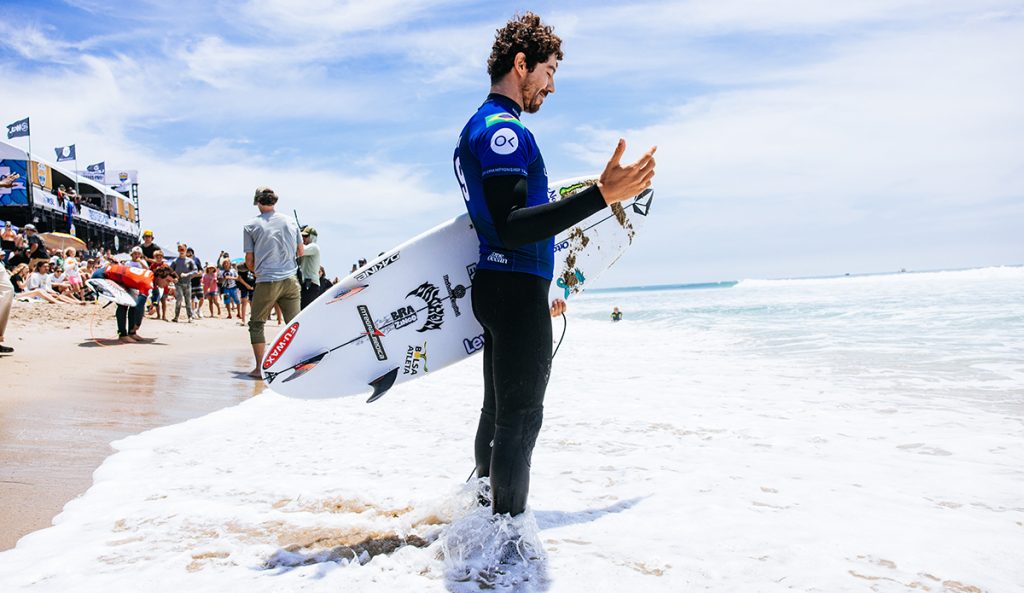
On Friday, June 26, in Saquarema, Brazil, Yago Dora beat Leonardo Fioravanti 15.00 to 13.37 to win the VIVO Rio Pro. It's his second title at this exact beach, and it puts him at No. 2 in the world — a reigning world champion proving the ranking wasn't a fluke. We mentioned this event the week it started, when it was still just a contest underway. Now that it's decided, the way it ended is worth a closer look — not because of who won, but because of how.
The Surfer Who Looked Like He Was Winning
Fioravanti came out fast. Two waves in the opening minutes, scored 5.67 and 2.50, put him ahead 8.17 before Dora had answered with anything. In a 30-minute heat, that's a real lead. From the beach, it looked decided — the kind of start that makes a crowd assume they already know how the story ends.
It wasn't decided. Dora hadn't been racing him. He'd been watching the ocean instead of the scoreboard, waiting for two waves worth committing to. When they came, he didn't waste either one. The first aerial scored 8.50. With half the heat still on the clock, a second landed at 6.50. Fifteen points, from two waves. No wasted attempts, no waves ridden just to look busy.
The Margin Was One-Hundredth of a Point
Fioravanti's answer came late. A big air attempt, strong but incomplete on the rotation, scored 7.50. He needed 7.51 to retake the lead. He missed it by a hundredth of a point, and ran out of clock looking for another wave to fix it.
That's the part that's easy to skip past. The heat wasn't decided by who tried harder, who looked more dangerous early, or who the crowd was louder for. It came down to two surfers making different decisions about when to commit — one spending energy on volume, hoping enough attempts would add up to a win. The other spending it on precision, trusting that two right waves would beat five rushed ones.
The Same Decision Shows Up Off the Water
You don't have to follow surfing to recognize that choice. It's the one in front of anyone building something — a company, a brand, a career.
There's a version of Fioravanti's start in most early-stage decisions: move fast, claim ground, look busy and dangerous before you've actually got something worth committing to. It feels like progress. Sometimes it is. But it rarely costs you the whole thing in one obvious moment. It costs you a hundredth of a point, somewhere quiet, that you don't notice until the heat is already over — a customer you rushed instead of earned, a launch you forced before it was ready, a year spent reacting to what everyone else was doing instead of building what was actually yours.
Dora's version is less visible and harder to imitate, because it asks for something most people aren't taught to value: the patience to let two waves be enough, if they're the right two.
Why This Matters to Us
We've posted about Yago Dora before — footage of him at Tavarua, the reef in Fiji this brand takes its name from, captioned: "Yago Dora doesn't waste movement. Every turn goes somewhere." Saquarema was the same idea, just on a bigger stage, with a title attached to it.
Respecting what you don't control — the ocean, the market, the timing of either — isn't passive. It's the discipline of waiting for the wave that's actually yours, and having the restraint not to waste the ones that aren't.
Cloudbreak. Born in Fiji. Shaped by the ocean.
Sources:

